It all started with a bird. A fifty dollar cockatiel I bought off Craigslist seventeen years ago. When I met the seller, I was surprised at how quick she was to take the money and hand me a rusty cage with a quiet bird perched in it. She made for her car, but before she could get into it, I asked her if the bird had any favorite types of toys or treats. “Just bells and stuff,” was all she said before turning and leaving.
Although I was a bit bewildered at the encounter, I wasn’t worried. Before I decided to contact her about the bird, I did some research on caring for cockatiels like what types of food and activities they needed to be healthy. I was pretty confident that I’d be prepared to help my new pet transition to my home.
I was wrong.
When we got home, I was able to get a good look at his cage. It was small, with just enough room for him to perch and maybe stretch his wings a little. The bars were covered in bird poop and rust. The plastic perch was disgusting—and so were his bowls. And when I reached in to take his bowls out to clean them, he quickly rushed at me with wildly flapping wings and loud screams. The stench of the cage filled the air when those wings went flapping. This wasn’t anything like I imagined when I did my research.
For the first several days I softly greeted him in the morning and he watched me warily from the other side of the cage with his shoulders shrugged up high as I refreshed his bowls. In the evenings I spent ten minutes sitting with him, just long enough for him to see that I wasn’t going to harm him.
I was able to remove the tray on the floor of his cage and clean it because it only required me to slide it out and leave with it. Cleaning the bars, on the other hand, required me to be in his personal space. That took slow movements, a soft voice, and some soft background music. But in the end, his environment was vastly improved.
The bird, however, was still very untrusting and I wanted to know how to help him. So I turned to Google. I read through several avian websites and came upon a very peculiar term: Cagebound. It is an anxiety disorder in birds who spend their life in a cage with very little socialization and have been neglected or abused for a long time.
What I came to understand was that this bird found safety behind his prison bars. He probably spent a long time alone, suffering with hurt and fear. And the only thing he learned to trust was his cage. Anyone outside of it was an enemy and although his cage was a prison, it was also his protection.
When I told my therapist about this, the first thing she did was change the focus of our session for the day. You see, I bought this bird only a couple of months after I’d left an abusive marriage, and with two very young children in tow. I was early in my therapy, emotionally vulnerable and already making my very first codependent decision as a newly single mother. This was the perfect opportunity for her to address this issue. The suprise, though, was the unraveling of a bigger and, in my opinion, more critical lesson.
The Cagebound Study.
Many of us have become cagebound, just like my bird. Afraid to see past the prison bars of whatever is keeping us locked in. When you spend enough time in fear, you become aware of where your cage bars are and who you can trust. You see the predators and learn how close they can come to you before they can hurt you. Sometimes you allow them to hurt you, because it’s expected of them. You believe that no one outside your cage bars are trustworthy. The bars don’t just keep you in, they keep the enemies out.
We believed lies that were told to us when we were young and innocent and naive. Maybe it was our parents’ obsession with perfection. Or perhaps a relative who groomed you into being their victim. It doesn’t matter who was the first to put us in a cage. What matters is we are in it.
I spent months working with Corwin — that’s the name I gave the cockatiel. At first, I got him a bigger cage, but he refused to leave his old one. So I made his little cage as comfortable as I could by placing a little hut for him to hide in so he could feel safe. I put some toys in there as well. I sang to him and got him used to the daily sounds of life in a home with children.
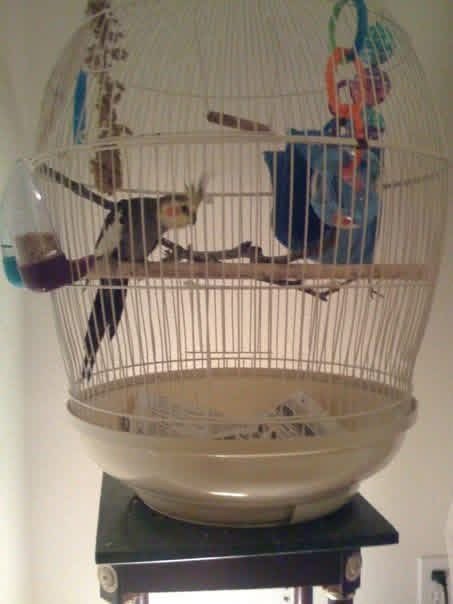
Then, when I saw that he seemed less afraid of my kids and me and neither attacked nor shrunk back when I reached into his cage, I placed his cage on the floor and faced it door-to-door to the bigger cage. The bigger cage. In time, he ventured into that cage. I also brought home two other birds, Patrick (another cockatiel) and Yoshi (a quaker parrot) to help him see what happy birds looked like.
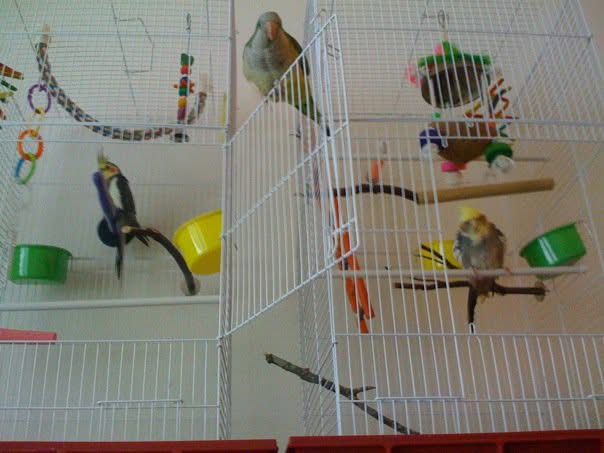
I speak about Corwin often in my YouTube channel, Running With Scissors, when I discuss trauma and boundaries. Witnessing his progress in his healing was pivotal in my own healing. In a sense, we healed from our own individual pasts together.
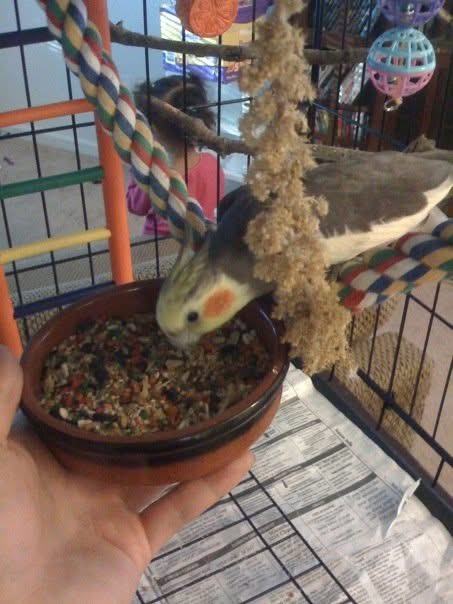
Eventually, Corwin took food out of my hand which led to him stepping up onto my hand. Later, he was brave enough to leave his cage. After getting his flight feathers clipped to allow him time to learn boundaries and rules, he found his voice and would be heard whistling with Patrick during the day. And dancing to music.
There are ugly things that are done to us in this world that put us in cages. We become isolated in pain and learn to keep everyone out. But when we do that, in time the cage becomes a prison that is filled with filth. It poisons the food and water we consume, filling us with cynicism and sorrow and hate. The bars are covered in jealousy and distrust. The floor is lined with lies. And we attack or shrink away from even the ones who want to help. But, like the bird who had every reason to become cagebound, we can venture out of the cage.
We can rebuild our identity, find our voice, establish strong and healthy boundaries, fill our body and soul with a healthy lifestyle and support system. And we can dance and be free birds.


Leave a Reply